 Skip to content

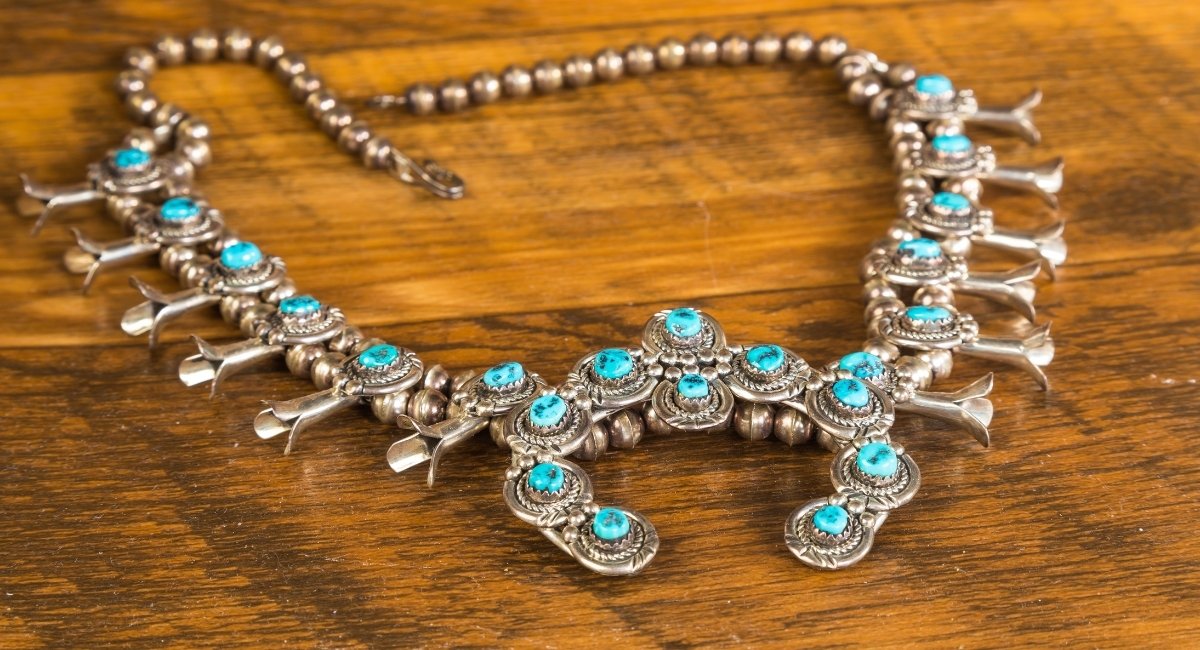
Origins and History Few pieces of jewelry hold the weight of history quite like the Squash Blossom necklace. Its story began in the 1860s, born from an intermingling of Navajo craftsmanship and Hispanic silversmithing techniques. These early artisans were resourceful, melting down silver pesos and dollars to forge the very first designs. By the 1890s, the addition of turquoise—and later the intricate inlay work of the Zuni—transformed the necklace into the iconic masterpiece we recognize today.
Form and Features While no two necklaces are identical, the architecture remains timeless: a central inverted crescent known as the Naja, flanked by “blossom” beads. Today’s artists continue to push the boundaries of this form, integrating diverse stones and tribal variations that range from the traditional to the contemporary.
Meaning and Tradition The Naja itself traveled a long path to Gallup, originating as a Moorish horse-shoe symbol used to ward off the evil eye before being adopted by Navajo silversmiths via Spanish influence. Combined with the squash blossom—a vital clan symbol and life-giving crop of the Southwest—the necklace became a powerful talisman of protection and heritage.
Owning a Piece of History To own a Squash Blossom is to hold a fragment of the American Southwest. It is more than an accessory; it is an investment in artisanal legacy and a staple for any serious collector.
