...

ABOUT NATIVE AMERICAN BOLO TIES

Discover mid-century Western prestige, sandcast slides, and mosaic inlay.

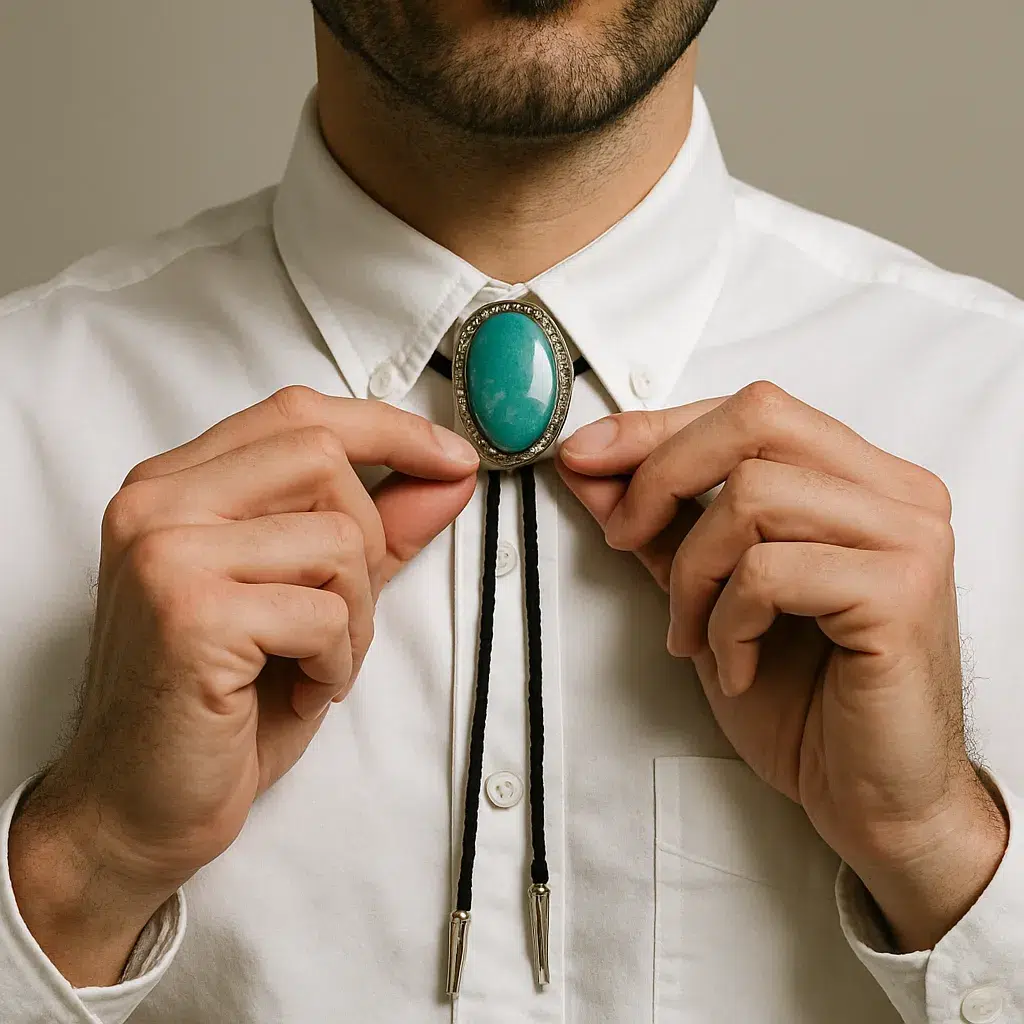
Classic Navajo sandcast sterling silver bolo tie featuring a central turquoise stone.

History & Craftsmanship

The Native American bolo tie stands as a definitive, universally recognized icon of classic Western prestige and fine indigenous craftsmanship. Born in the rugged expanses of the mid-20th century Southwest, the bolo tie represents a beautiful, modern intersection between traditional tribal silverwork and classic American neckwear. As New Mexico and Arizona grew into global travel destinations, regional silversmiths saw an opportunity to transform the utilitarian leather cord and slide into a magnificent showcase for elite fine art. Early master smiths utilized heavy, hand-carved tufa stone molds to cast robust silver frames, setting the stage for an accessory that would eventually become the official state tie of New Mexico.

The brilliance of the bolo tie lies in how cleanly it accommodates the diverse, highly specialized talents of different tribal communities. Navajo silversmiths traditionally favor a bold, sculptural aesthetic, creating large-scale bolo slides that feature massive, premium turquoise stones framed by deep chisel work, dimensional silver feathers, and heavy leaf motifs. Zuni master lapidaries utilize the flat canvas of the bolo slide to create flawless mosaic inlay patterns, precisely cutting stones like mother-of-pearl, coral, and black jet into intricate geometric configurations. Hopi artisans utilize their signature dual-layer overlay technique, using oxidized, textured black backgrounds to make polished, hand-sawn silver clan motifs pop with dramatic, clean contrast.

Since 1913, Richardson’s Trading Post has proudly served as a primary guardian of this timeless Western art form. For over eleven decades, our historic vault in Gallup, New Mexico, has cultivated direct, honorable partnerships with the most respected silversmithing families in the region. Whether you are seeking the historic weight of a vintage dead pawn sandcast slide or a highly sought-after contemporary piece featuring custom-stamped silver tips, you are investing in a verified symbol of authentic Southwestern heritage. Explore our curated selection of genuine bolo ties below, each piece individually vetted for absolute tribal lineage and exceptional artistic merit.

The Richardson's Bolo Ties Collection

Frequently Asked Questions

Your Questions About Native American Bolo Ties Answered

Zuni mosaic multi-stone channel inlay geometric pendant necklace on a jewelry display.

What is the significance of the bolo tie in Native American culture?

While the origin of the bolo tie is often debated, it became a primary canvas for native american jewelry bolo tie artistry in the mid-20th century. For many Navajo, Zuni, and Hopi artists, the bolo tie represents a fusion of traditional silverwork with modern Western fashion. Today, native americans and bolo ties are inextricably linked, with the ties serving as symbols of prestige, cultural pride, and high-level craftsmanship.
At Richardson’s Trading Post, every native american silver bolo tie is guaranteed authentic. We work directly with artists who use genuine sterling silver and natural gemstones. Look for artist hallmarks and the quality of the “tips” (the metal ends of the cord). Unlike a generic native american style bolo tie, a true artisan piece will have hand-stamped or hand-fabricated details that mass-produced versions simply cannot replicate.
A common question for new collectors is: how long should a bolo tie be? Generally, the tips of the tie should reach about 3 to 4 inches below the center of your chest, or sit right at the top of your breastbone. For taller individuals, a 38-to-42-inch cord is standard to ensure the tie hangs gracefully without looking too short.
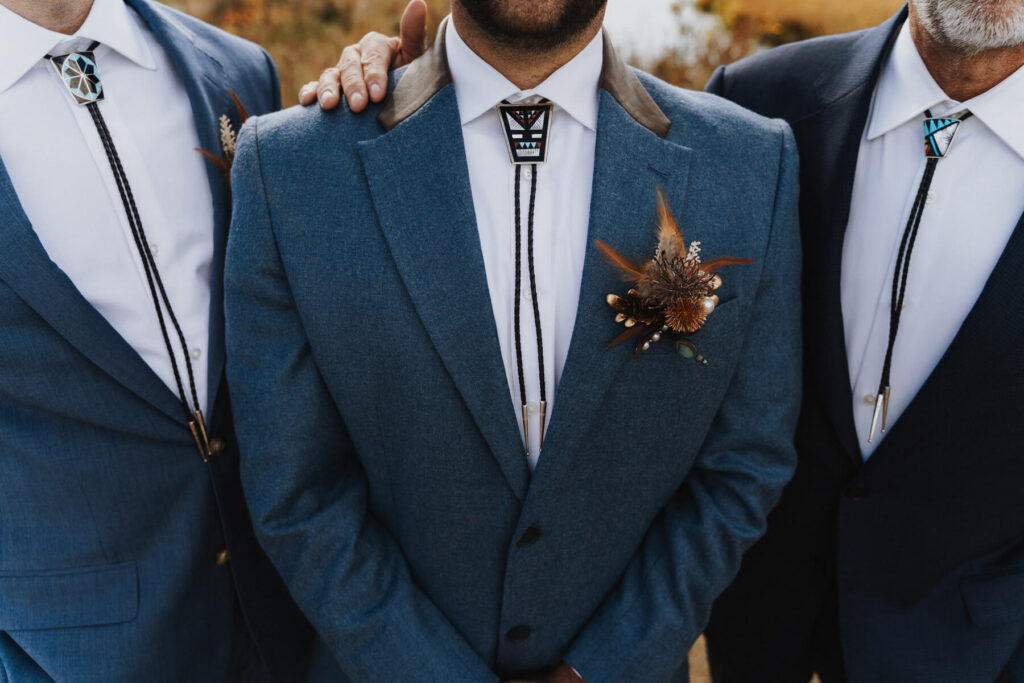
There is great versatility in a native american wearing bolo tie style. For a formal look, the slide should be cinched tight to the collar like a traditional fabric tie. For a more casual, “Southwest chic” appearance, the slide can be worn lower, allowing the collar to remain open. This flexibility has made the bolo tie a favorite for everything from gallery openings to formal weddings.
Absolutely. While often associated with men’s Western wear, the women’s native american bolo tie has become a staple of contemporary fashion. Women often prefer smaller, more delicate slides featuring intricate Zuni needlepoint or petit point turquoise, often wearing them with denim or as a statement piece over a simple blouse.
Our collection of native american bolo ties features premium materials sourced directly from the Southwest. We prioritize hand-braided leather cords and slides featuring high-grade turquoise, coral, and shell. Whether you are looking for a vintage sand-cast piece or a contemporary inlay design, each tie in our gallery is a functional piece of art built to last a lifetime.

Recent posts

DISPATCHES FROM THE POST

New arrivals and stories from Gallup, delivered to your inbox.

Piece Inquiry

Please fill out the fields...